
In the field with Sally Fox
I’ve long been a supporter of anything California grown, and have sourced a few items for experimentation from Sally Fox to support this movement. Getting to visit Sally’s field lab was a very enlightening experience to better understand all of what is required to produce this quality material. Growing cotton has been around since almost the dawn of time, but the science and alchemy behind this magical plant is not often known lest you hear about it from a breeder.
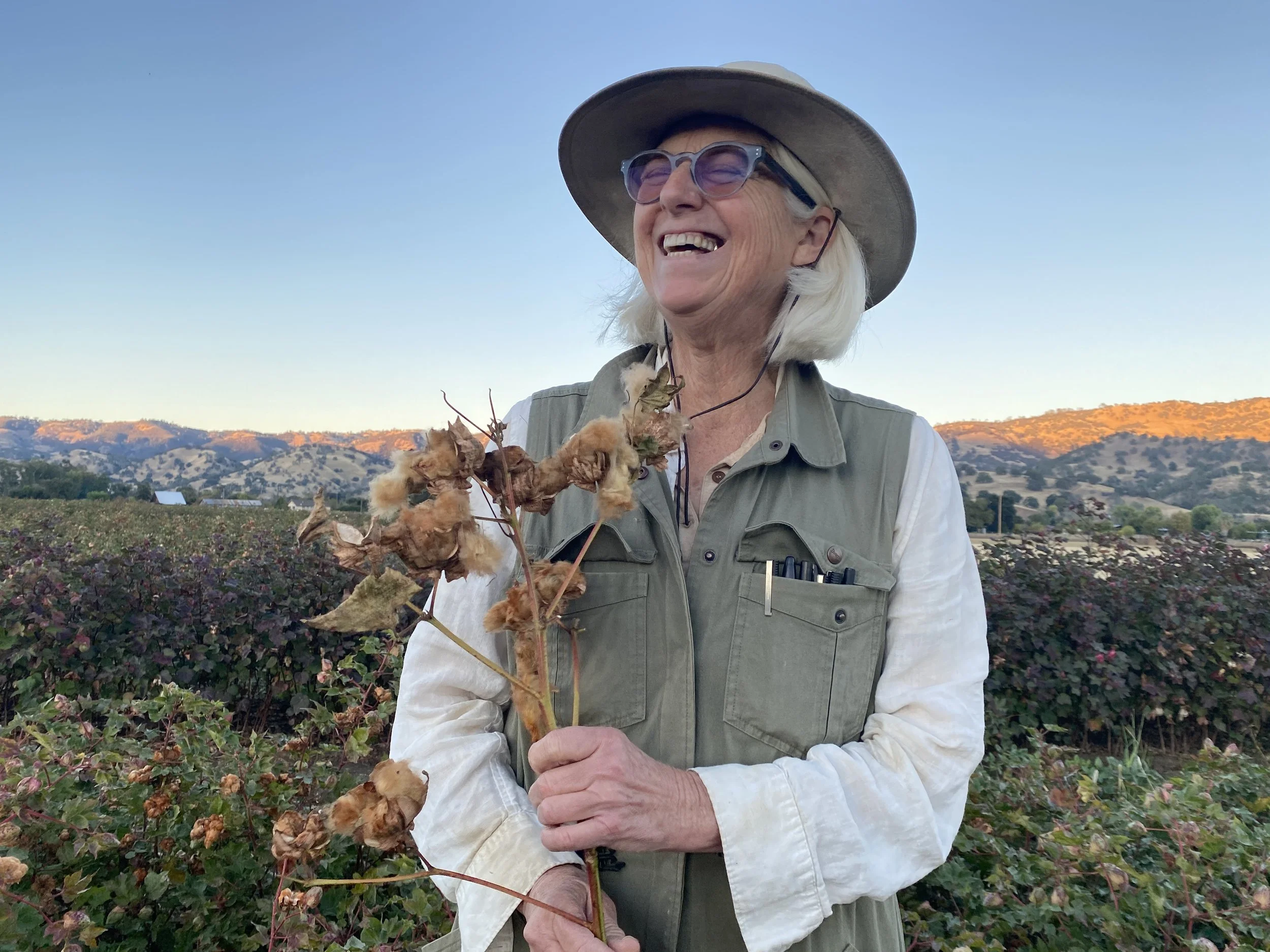
Sally’s aim in growing various strains of cotton is focused on growing a particular breed that will produce an improved yield in quantity, along with length and strength in the fibers. This could take a couple generations of cotton growth, and this is exactly why her “lab” or field of many plants exists. Hearing Sally talk about the numerous trials over time, and seeds that came from other parts of the world, was an expansive discovery relating to all living organisms. Plants will grow on their own but breeders and growers have the capability of studying them and refining them. As someone who does not work in agriculture, I became a lot more aware of the invested value of time, effort, and knowledge required in this particular step of the supply chain: crafting the optimal seed. This seed would go on to grow a quality “product” or textile that could then be worn, felt, appreciated, and kept for an extended time. An additional fact about Sally’s colored cotton is that the “coyote brown” will begin to darken after about 80 washes. Sally breeds for both brown and green colored cotton and has trademarked her strains as Colorganic Cotton. Colored cotton is grown in various other parts of the world, but perhaps with not the same precision and dedication that Sally has given to a lifetime of work.
Sally also let us know that when measured with a scientific device, this particular fabric had a much higher frequency than the same colored cotton grown en masse in countries like India. Sally truly believes that the plant itself and those who have worked with it, to breeding, growing it, processing, spinning and weaving truly have done the work with appreciation and some level of affection. She spoke highly of the work by Taishoboseki in Osaka who spun the cotton, and Toban Textiles of Kobe, Japan who wove it. These have been small but long lasting operations that continue to do their work with great care and intention.
Finding ways to do meaningful work that builds a better future is centered in the details. I have this to be true time and time again as I’ve developed a new process of operation, within my own mindsets and practices. To add the last step of cutting and sewing from this material, I will find much joy and gratification knowing that my own work will extend a supply chain of people who truly value their work and do it consciously with heart and soul. The additional reward in the making will be to see it worn on someone who truly appreciates all the beauty that we can bring into the world together.